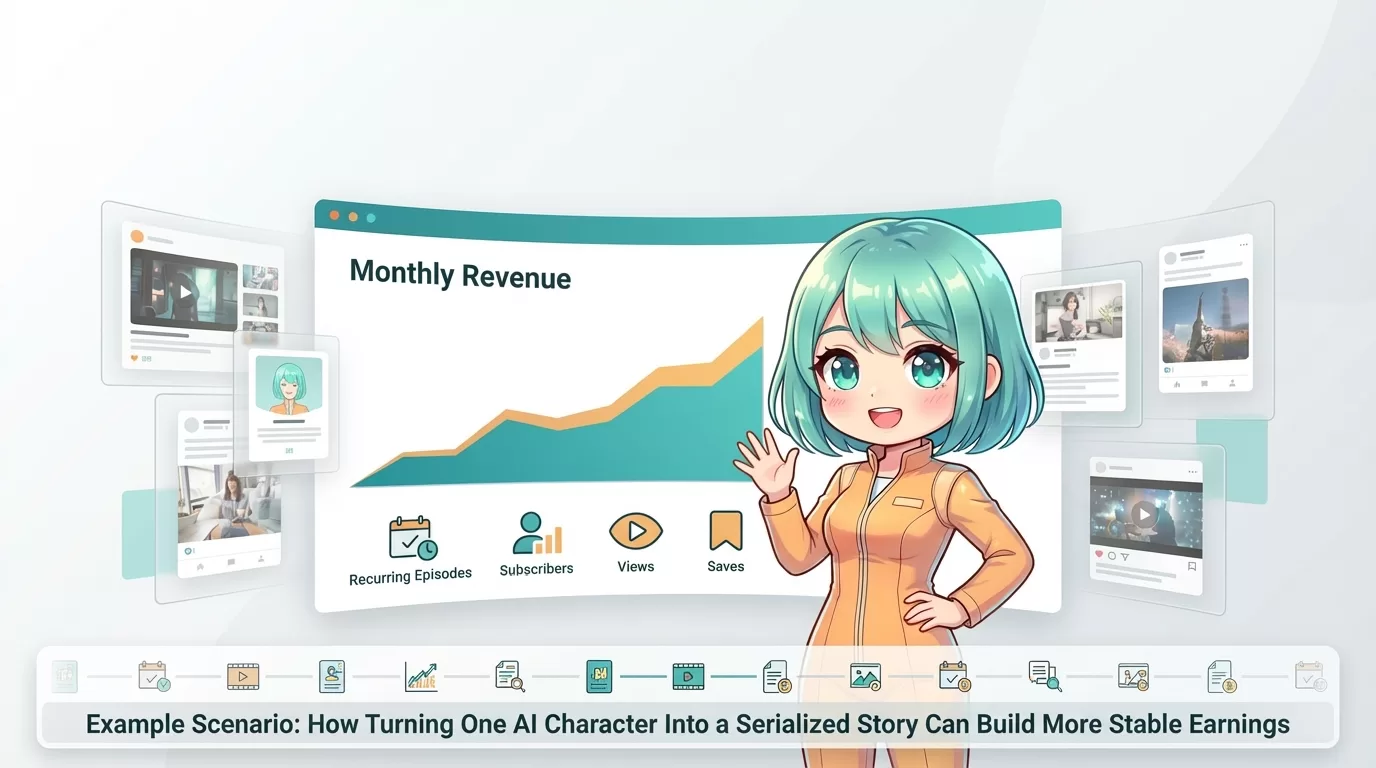
How Turning One AI Character Into a Serialized Story Can Build More Stable Earnings (Example Scenario)
Conclusion
For many creators, especially those balancing a full‑time job, AI characters can become a sustainable side project when developed as ongoing, story‑driven series rather than one‑off assets. Serialization gives your character a world, a tone, and a sense of progression—elements that make it easier for audiences to return and engage again.
This approach does not guarantee specific income, but it often provides a more predictable structure for creators who want steady output without dramatically increasing workload.
Why Serialization Helps Stabilize Sales
Selling digital assets—images, short videos, or small 3D items—can be unpredictable when each product stands alone. A serialized universe, however, creates context and repeat demand.
Key reasons serialization helps:
- One‑off items are difficult to forecast. Some months sell well; others do not.
- A series encourages anticipation. Once people connect with a character or setting, they tend to look forward to the next installment.
- A single character can produce multiple product lines. This might include images, short videos, themed 3D props, or variations on outfits.
- Each new release boosts visibility of earlier items. New episodes draw attention back to the entire catalog.
- A consistent world builds a loyal segment of buyers. Even a small base of repeat customers can create stability over time.
Earnings vary widely by creator, but serialization often lengthens the relationship between the audience and the character, which can lead to cumulative sales rather than isolated spikes.
The Process
Below is a simple workflow that helps creators build and maintain a serialized AI‑character project while keeping workload reasonable.
1. Define the Character’s Core Identity
Before producing any assets, decide what anchors the character. Aim for clarity rather than complexity.
Consider:
- Age, personality traits, typical mannerisms
- Strengths, weaknesses, recurring habits
- The overall world or genre (urban, sci‑fi, fantasy, slice‑of‑life, and so on)
This foundation helps keep the story consistent and makes future episodes easier to produce.
2. Choose a Format for Your Series
Consistency helps both you and your audience. Define a “template” for each installment.
Elements to decide:
- Structure of each episode (for example: one image + a short caption or micro‑story)
- Series title
- Main setting (a neighborhood, a workshop, a starship, etc.)
- Visual themes, including props or clothing if you generate 3D items
When your format stays steady, production takes less creative energy, and buyers know what they’re getting.
3. Generate Content in Batches
Batch production reduces pressure and prevents last‑minute scrambling.
A practical starting stock might include:
- Around 20 images
- 5–10 short video clips
- 3–5 small 3D objects or accessories
These pieces give you enough material to release content gradually without needing daily or even intensive weekly production time.
4. Build a Product Page With a Narrative Angle
Your listing should help buyers understand the world and the ongoing nature of the content.
Useful components:
- Character introduction
- The central premise of the series
- Example use cases (such as social media posts, background visuals, or creative world‑building)
- A preview of future episodes or themes
Simply letting buyers know that the series will continue often increases confidence and repeat interest.
5. Use Consistent Updates to Grow the Brand
You do not need constant output. Even small, regular releases can slowly strengthen the character’s identity.
Tips:
- One update a week is generally enough for steady momentum
- Avoid the temptation to expand workload dramatically
- Each additional episode naturally boosts visibility of earlier products
This method turns your character into a long‑term creative asset rather than a one‑time item.
Case Study (Hypothetical Example)
One Character Generating Approximately ¥68,000 per Month
A fictional creator, whom we’ll call A, works full‑time and creates AI‑generated assets during limited spare hours. A developed a character named Minato, the protagonist of a “near‑future walking journal” series.
Here is the approximate progression:
- In the first month, the initial asset set sold modestly.
- A added one new installment each week.
- By the third month, the combined monthly revenue across all Minato‑related items reached roughly ¥68,000.
- A spent only 2–3 hours per week on the project.
- The entire series used a single character.
According to A (again, this is a hypothetical example), the biggest shift was not the number of individual buyers but the appearance of repeat customers who wanted each new episode.
This scenario is not a guarantee of results. It simply illustrates how serialization can change the dynamics of digital‑asset sales.
Important Considerations
Before creating a serialized AI character, keep the following points in mind:
- Ensure you use characters and assets you have rights to create and sell.
- Establish at least one consistent core element in your world (tone, setting, or theme).
- Avoid major direction changes once the series begins.
- Keep workload stable and manageable; long‑term sustainability matters more than quick volume.
- Income varies based on many factors, including audience, niche, and platform.
Summary
Serializing an AI character allows you to build on a growing world rather than reinventing concepts for every product. When each chapter deepens the character’s story, even simple assets have clear purpose and appeal. Instead of a scattered catalog of unrelated items, you develop a world that encourages people to return.
While earnings are never guaranteed, the method offers a structured way to produce consistent content without significantly increasing the time required each week.
Next Step
If you want to explore creating your own serialized AI character content, start by reviewing how to design a structured, ongoing digital series.
See how to design your own serialized AI‑character content.