Conclusion
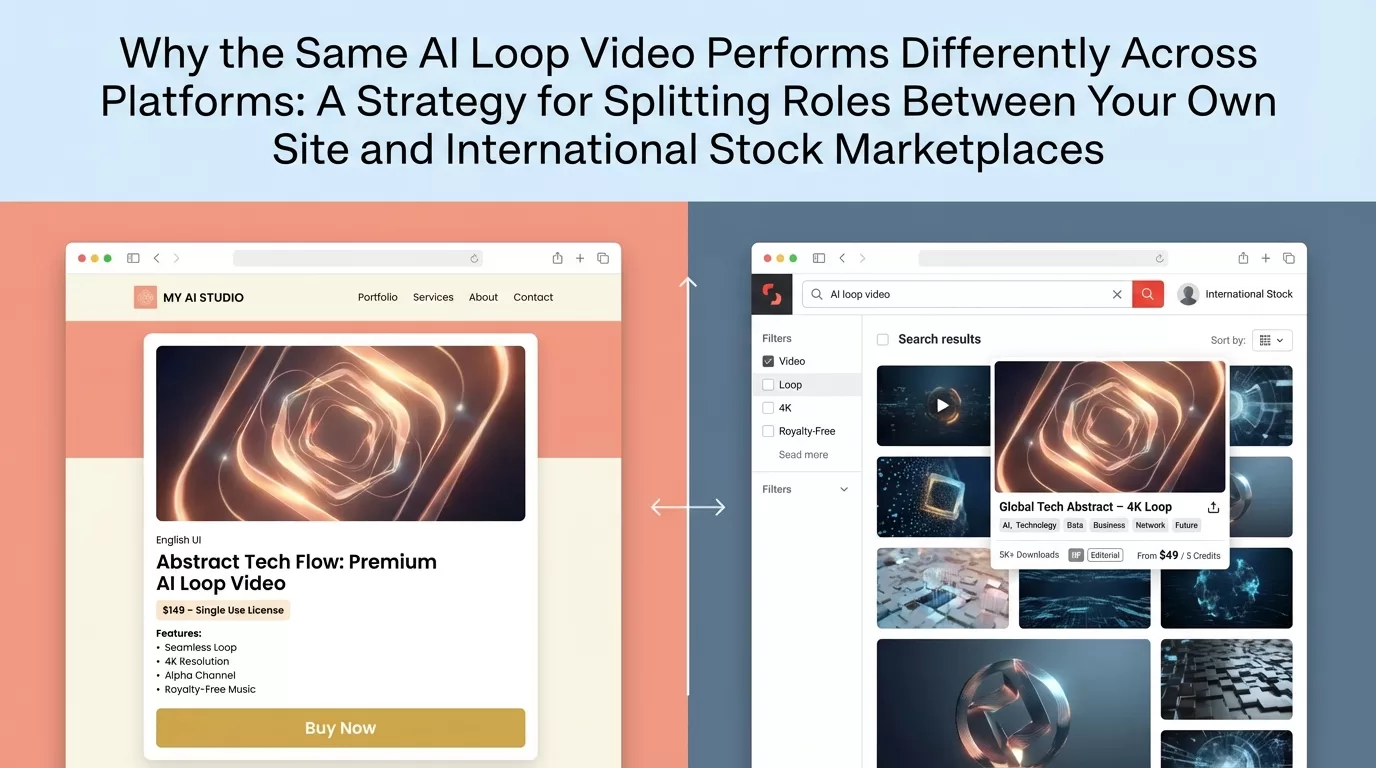
AI‑generated loop videos tend to perform better when you separate your distribution channels based on how each type of video is used. Even if two videos are created with the same workflow, the ones suited for international stock marketplaces differ from those that work best on your own WordPress site.
Why This Matters
User behavior, search intent, and expected asset style vary significantly between international stock platforms and a self‑hosted WordPress site.
- International stock platforms: Strong for high‑volume, general‑purpose search terms
- Your own WordPress site: Better for niche, purpose‑specific assets
- Commercial usage, licensing expectations, and pricing standards differ by channel
While results always vary by creator, assigning a clear role to each platform makes it easier to develop multiple revenue paths from the same production time, without relying on a single outlet.
Step 1: Sort Your Loop Videos Into Three Practical Categories
To organize your library, it helps to classify each loop video by intended use rather than aesthetic alone.
1. General‑Purpose Categories
These often serve as flexible backgrounds and are searched broadly.
- Ambient backgrounds
- Abstract motion and particle loops
- Light patterns or soft textures
2. Niche Categories
These are more specific and usually purchased with a clear purpose in mind.
- Industry‑specific loops (e.g., wellness, education, hospitality)
- Theme‑focused loops (e.g., minimal tech, botanical, craft‑style textures)
- Seasonal or event‑driven loops
3. High Commercial Value Categories
These emphasize visual quality and are often used in professional advertising contexts.
- Polished, texture‑rich loops for branding or promo videos
- Cinematic lighting loops suitable for high‑end marketing
Step 2: Assign Each Video to the Right Channel
The same creator can benefit from distributing assets across platforms, as long as each platform’s strengths are respected.
What Works Best on International Stock Marketplaces
- Widely searched abstract backgrounds
- Assets that can be easily expanded into color or style variations
- Lower‑priced items that benefit from high search volume
- Loops with universal themes that appeal to global audiences
Because stock platforms attract users browsing through massive libraries, assets that are easy to categorize and appear in broad searches tend to perform better.
What Works Best on Your Own WordPress Site
- Purpose‑driven loops used in professional workflows (for example, salon display backgrounds or education‑related scenes)
- Cultural or stylistic themes that may not attract global search volume but resonate with specific audiences
- Niche assets that could get buried on large stock platforms
Your site allows you to present collections with context, explain their ideal use cases, and build a more specialized, boutique‑style catalog where niche content is easier for users to discover.
Step 3: A Fictional Case Example
To illustrate how channel separation can work in practice, consider a hypothetical creator.
Creator A’s Distribution Choices
- Abstract particle loop (general‑purpose)
→ Listed on international stock platforms; it generates steady, modest sales.
- Vertical loop with a textured, handmade‑paper aesthetic (niche)
→ Listed on their WordPress site at a higher price point; appeals to users searching for a specific look.
- High‑quality lighting loop for branding work (commercial)
→ Added selectively to whichever channel best aligns with its intended use.
By assigning each asset to a channel that matches how buyers search, Creator A uses the same production hours more effectively.
Step 4: A Simple Routine for Consistent Channel Management
To keep your asset distribution organized, consider establishing a small monthly system.
- Update your internal “asset classification list” at the end of each month.
- Tag all new videos as general‑purpose, niche, or commercial.
- On your WordPress site, create detailed categories to make your library feel like a highly curated shop.
- Review which types of assets performed best in each channel and adjust future uploads accordingly.
This type of ongoing maintenance helps maintain clarity as your catalog grows.
Important Notes and Limitations
Channel separation can increase efficiency, but several practical considerations should be addressed.
- When listing the same video on multiple platforms, always check usage rules and distribution policies.
- A self‑hosted WordPress site requires ongoing effort for traffic and visibility; it’s fine to start with a small number of assets.
- Trends shift, and certain styles may rise or fall in demand without warning.
- Pricing is rarely “set and forget.” Testing different price ranges can help find what fits your audience.
- Sales performance varies from creator to creator; no specific outcome can be guaranteed.
These factors all influence how effectively channel separation will work for you.
Summary
Loop videos aren’t simply “finished” once they’re created. They are assets whose value changes depending on where they’re offered. Assigning general‑purpose loops to international stock platforms and niche loops to your own WordPress site can help you make better use of your production time.
By defining clear roles for your distribution channels, you build a structure where each new asset has a purposeful home—and where your overall system grows more sustainable over time.
Next Step
If you’re unsure where your own loops belong, explore how Yosukuri organizes and presents AI‑generated assets. It may help you refine your channel strategy and decide the ideal distribution for your videos.
See how Yosukuri organizes AI‑generated assets and refine your own channel strategy.